



Monday, 18 May 2026 01:45 PM
Company Update
NEW YORK CITY, NY / ACCESS Newswire / May 18, 2026 / Nobody builds anything entirely by themselves.
That's not a knock on ambition or hard work. It's just the part of the story that rarely makes the highlight reel. Within any business that took off, there was a mentor, a co-founder, a key hire who made it real. The real estate investor with the growing net worth? There were brokers, advisors, and relationships that opened doors. Even the person who ‘turned their finances around' usually had something that helped: a conversation with the right person, a program that gave them a foothold, or someone who showed them an option they didn't know existed.
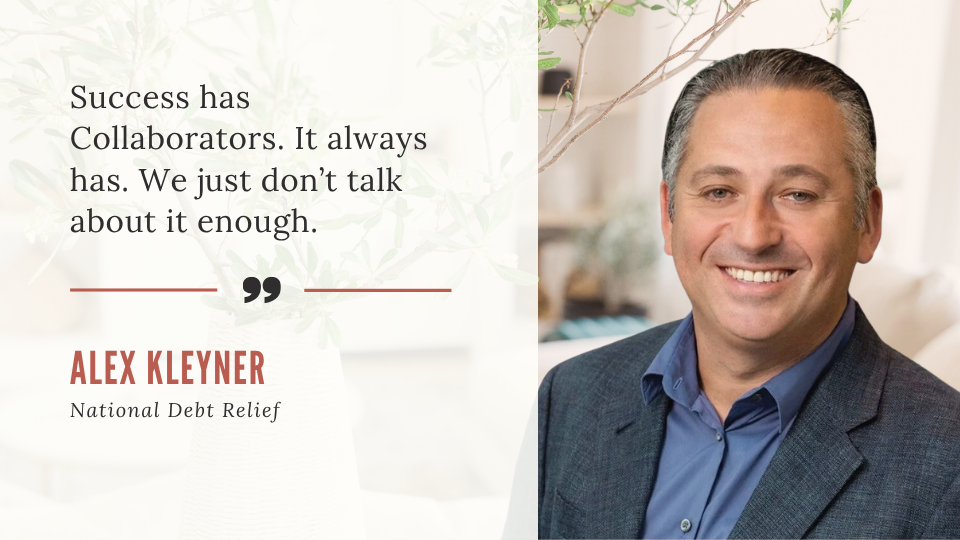
"Success has collaborators," says Alex Kleyner, CEO and Co-Founder of National Debt Relief, with close ties to Miami, Florida, a leading voice on financial health and wealth metrics. "It always has. We just don't talk about them enough."
This isn't limited to business or investing. It plays out in everyday financial life, too: in the household budget that finally clicked after someone sat down with an advisor, or in the debt that started moving when someone stopped trying to figure it out alone and asked for help. The pattern is consistent: access to the right guidance, at the right moment, changes outcomes. Net worth doesn't grow in a vacuum. It grows when the right decisions get made, and those decisions are almost always better with support behind them.
Alex Kleyner has watched this dynamic across contexts, from real estate to the financial lives of everyday people carrying more weight than they let on. "Almost every meaningful outcome I've seen involved other people at a critical moment," he says. "A mentor, a partner, a professional who helped someone see options they didn't know existed. That support rarely gets named, but it's almost always there."
In business, nobody raises an eyebrow when you hire an attorney, bring on a financial advisor, or call in a consultant. Those are just smart decisions. But somewhere along the way, a different standard gets applied to personal finances, especially when things get difficult. There's a tendency to go quiet, to manage it alone, to treat asking for help as something to be embarrassed about rather than something strategic.
"It isn't. Asking for help is how things get built. And it's how things get fixed," says Daniel Tilipman, Co-Founder of National Debt Relief.
For people who deal with debt, this reframe matters. Debt is one of the areas where people are most likely to carry the weight silently, sometimes for years, without telling anyone or exploring what options are available. The cost of that isn't just financial. It's the time, the stress, and the mental load of navigating something complex without support, when a clearer path may have been within reach the whole time.
"There's a real cost to managing debt alone," Alex Kleyner says. "Not just to your financial health, but in time spent navigating something unfamiliar without support."
Getting help, whether that's from a financial planner, a debt specialist, or simply a conversation that surfaces better options, follows the same logic as every other area of life where guidance produces better results. It's not a last resort. For a lot of people, it's the smartest first move they could make.
"The people who come out the other side of hard financial situations rarely did it in total isolation," says Alex Kleyner. "Somewhere along the way, they let someone in."
That's not a footnote to their story. That's part of how it ends well.
CONTACT:
Andrew Mitchell
[email protected]
SOURCE: Cambridge Global